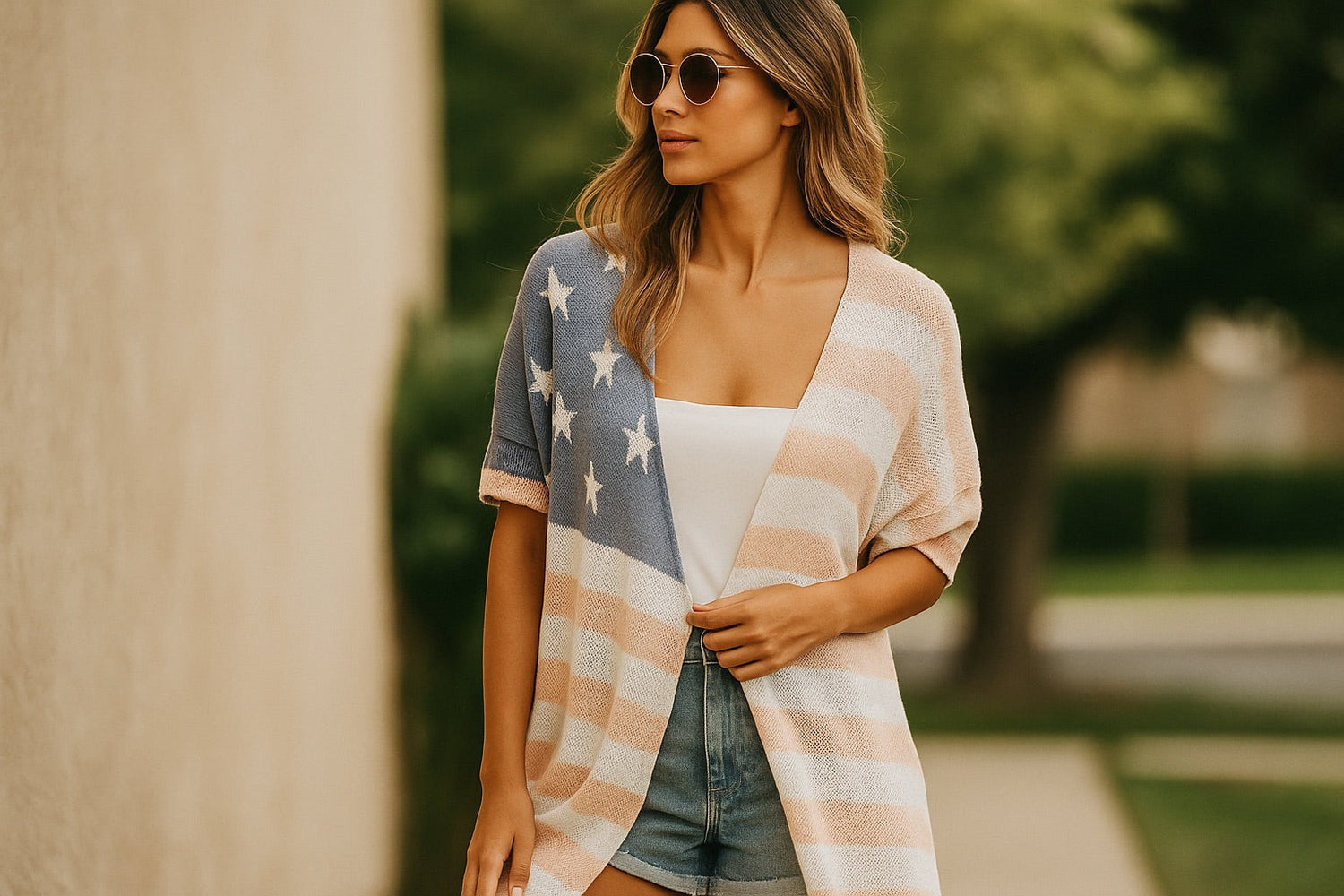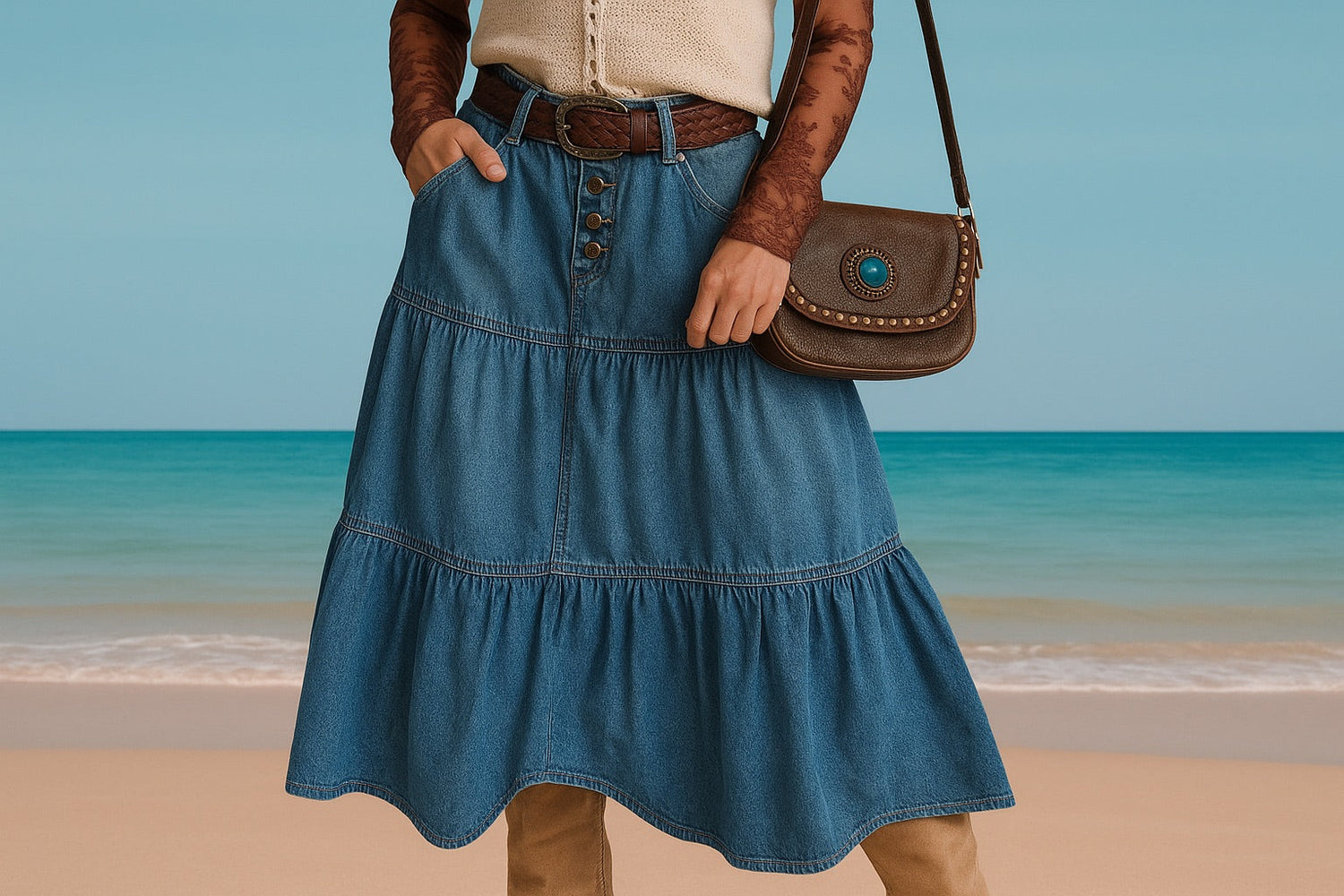

Heatwave Dressing: The Fabrics That Actually Breathe (and the Bags That Survive the Beach)
July heat is a different problem than June heat. By the time temperatures hold above 90°F for days at a stretch, the clothes that felt fine in May start failing you — and the bag you grabbed for a quick beach trip is leaking sunscreen onto your phone. What you wear in a heatwave is a materials question, not a style question. Get the fabric right first. The rest follows.
Why fabric choice matters more in heat
Your body cools itself by moving heat away from the skin through sweat evaporation. Clothing either helps that process or blocks it. A synthetic fabric — polyester, nylon, most blends labeled "moisture-wicking" for activewear — traps warm air against your body and slows evaporation. In a gym, that's manageable. On a beach in July, it's miserable.
Natural fibers work differently. They absorb moisture, allow air circulation between threads, and dry at a rate your skin can keep up with. Linen, in particular, can absorb up to 20% of its weight in moisture before it feels wet (CELC, European Confederation of Linen and Hemp). That's why a linen dress feels dry even when you're not.
The weave matters too, not just the fiber. A tight, dense weave in cotton traps heat almost as effectively as a synthetic. A loose plain weave in the same fiber breathes twice as well. This is why a gauzy cotton cover-up feels cooler than a cotton jersey T-shirt at the same temperature.
The fabrics that actually breathe past 90°F
Four fibers earn their place in a July wardrobe. Here's what each one does and where it works best.
Linen
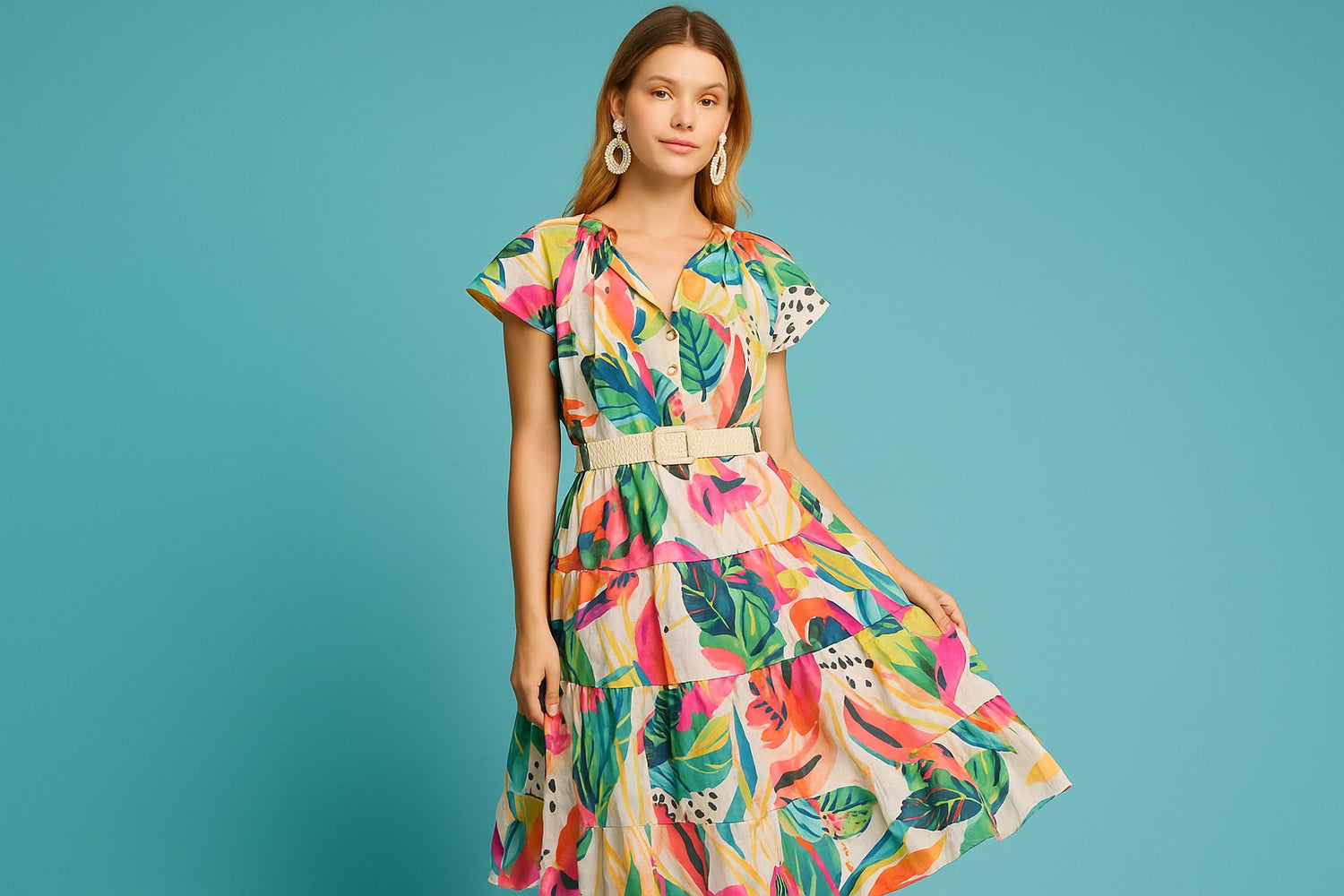
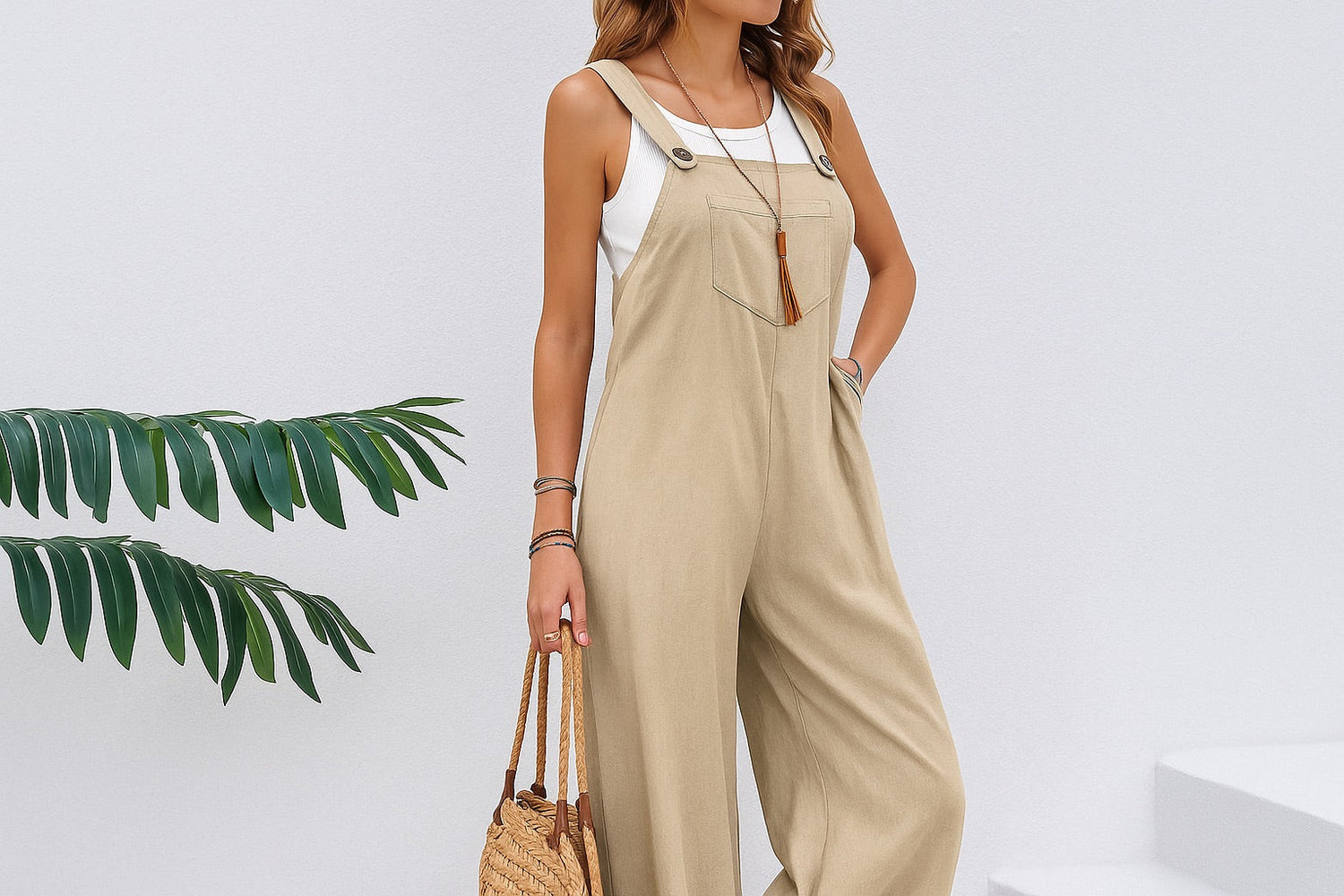
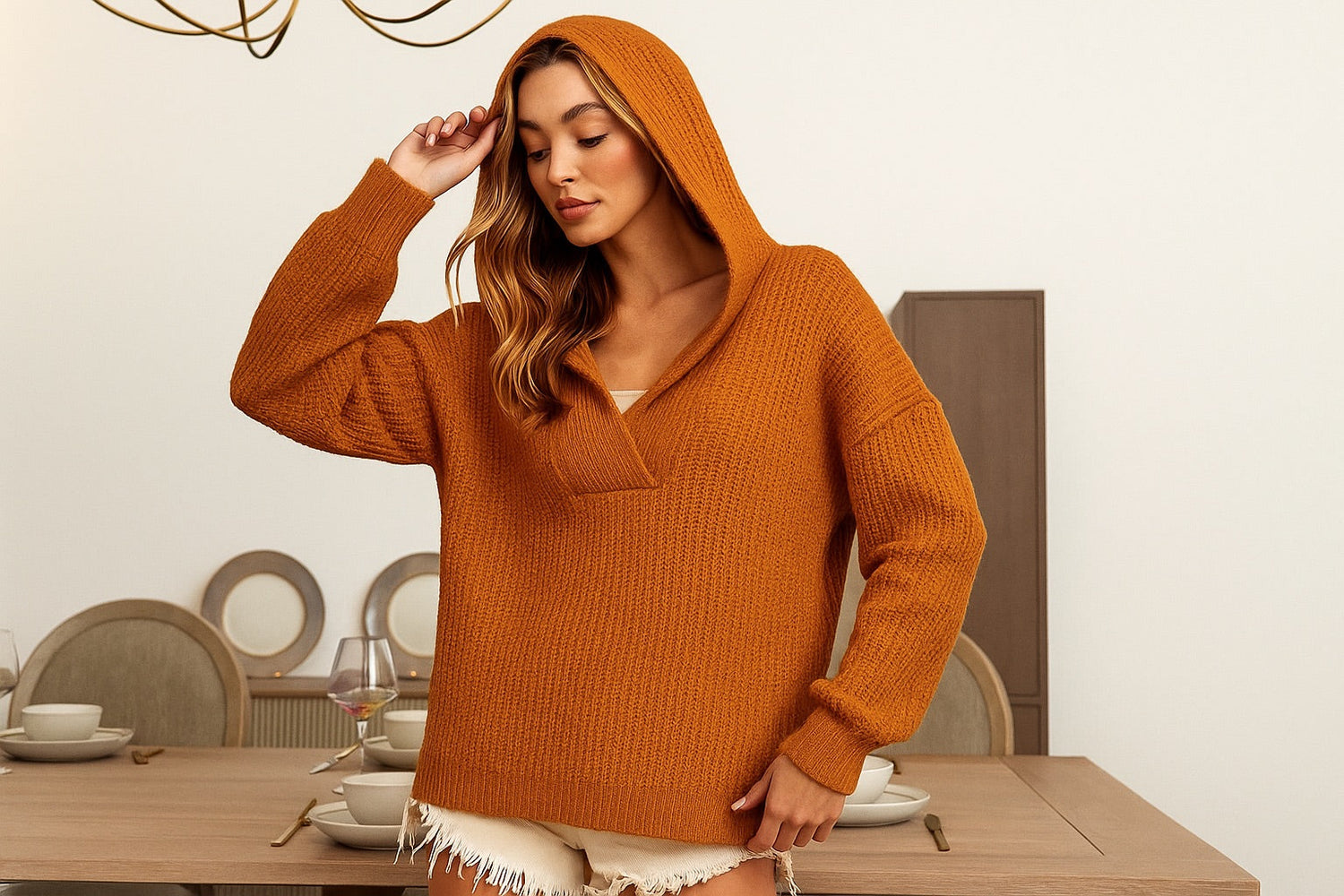
Linen is made from flax fibers, which are hollow — heat moves through them, not around them. It wrinkles. That's not a flaw; it's the fiber releasing moisture as it dries. A wrinkled linen dress means it's doing its job. Our linen dresses are the most returned-to pieces in the Livostyle edit every July, and for good reason. Pair with flat sandals, a straw bag, and nothing else.
Cotton (loose weave only)
100% cotton in a gauze, seersucker, or open plain weave is the second-best option. It's softer against skin than linen and slightly more forgiving for all-day wear. Cotton jersey — the fabric in most T-shirts — is denser and traps more heat. Check the weave before you buy, not just the fiber content.
Tencel (lyocell)
Tencel is wood-pulp derived and processed in a closed-loop system that recycles 99% of the solvent used (Ellen MacArthur Foundation). It drapes like silk, breathes like cotton, and has a slight sheen that reads elevated without trying. Tencel midi dresses and wide-leg pants are the right move for a heatwave that extends into a dinner reservation. Browse our midi dress edit for Tencel options.
Bamboo
Bamboo fabric is softer than cotton and naturally temperature-regulating. It works best in knit form for loungewear or as a base layer under a linen overshirt. It's not as widely available in structured garments, but when you find it in a tank or a slip dress, it's worth the premium.
Fabrics to skip on a 95°F day
Polyester and polyester blends trap heat and hold odor. Rayon (viscose) feels cool initially but goes limp when wet and takes a long time to dry. Silk is breathable but delicate — sweat stains are nearly impossible to remove from silk without professional cleaning, and a beach day will test it. Save silk for air-conditioned evenings.
Acrylic and nylon are the worst offenders. Both are essentially plastic threads. They do not breathe. On a hot day, wearing either is the equivalent of wrapping yourself in a light-gauge plastic bag. Skip entirely from June through September.
What makes a beach bag worth carrying
A beach bag fails in one of three ways: it can't hold what you need, it falls apart when wet, or it's impossible to clean after. Here's the checklist we use before recommending any bag for beach or vacation use.
- Interior volume: big enough for a towel, a change of clothes, sunscreen, and a water bottle. If it can't fit all four, it's a day bag, not a beach bag.
- Material durability in humidity: woven straw and jute dry fast. Faux leather wipes clean. Genuine suede and uncoated canvas absorb water and hold it — both are wrong for the beach.
- Closure type: open-top totes are fast to access but expose your phone and keys to sand. A zip or snap closure adds 10 seconds per access and saves a ruined phone.
- Strap length: shoulder straps work for walking. A crossbody strap keeps hands free when you're carrying two coffees and a towel. The best beach bags offer both.
- Weight when empty: a bag you'll load with a full day's worth of supplies should be as light as possible when empty. Heavy hardware and thick leather add weight before you've packed a single thing.
"The beach bag is the one place I tell clients not to overthink material quality. It's going to get sand in it, sunscreen on it, and wet from the bottom up. Buy something that survives that — not something you'll be afraid to use."
— Lena Park, Livostyle Care & Materials Editor
The best beach bags of 2026 from our edit
Every bag below is from our live bags collection. We've organized them by use case, because the right bag depends on what your day actually looks like.
For the full beach day: a straw tote
Wavy Rainbow Straw Tote Bag — the jute-woven construction dries fast, the multicolor stripe reads well against a solid swimsuit, and the open top makes it easy to grab sunscreen without digging. This is the bag for a full beach day when you're not worried about your phone getting sandy. Pair it with a swimsuit and a linen cover-up.
For beach-to-brunch: a structured crossbody
2 Piece Phone Case Crossbody Wallet — a phone case that doubles as a crossbody wallet. This is the move when you're going from the shore to a restaurant and don't want to carry two bags. The snap closure keeps sand out. The yellow colorway works against both white and navy.
Textured PU Leather Sling Bag — the geometric texture in ivory reads clean against a tan. PU leather wipes down in seconds, which matters when sunscreen is involved. The adjustable strap lets you wear it crossbody or sling it over one shoulder depending on how much you're carrying.
For a vacation day with stops
Sun and Sand Crossbody Bag — the tropical print does the work of an accessory so you don't need jewelry. It's compact enough for a market stop but holds a card, phone, and lip balm without bulk. The printed colorway pairs with beach dresses in solid neutrals.
Sun and Sand 3 Piece Bag Set — a tote, crossbody, and wallet in a coordinated tropical print. The tote handles the beach supplies; the crossbody takes over when you head into town. Having the wallet match removes one decision from a busy travel day.
For a rooftop or evening after the beach
Woven Crossbody Bag with Adjustable Strap — the metallic gold woven finish reads evening without being overdressed. This is the bag that goes from a beach sunset straight to a rooftop bar, paired with a Tencel slip dress and flat sandals. Check our rooftop bar outfits edit for the full formula.
For everyday vacation errands
Multi Grommet Belt Strap Rustic Rectangular Hand Bag in Khaki — the khaki colorway goes with everything, the buckle detail gives it structure, and the rectangular silhouette fits a paperback, a water bottle, and a sunscreen stick without looking overstuffed. This is the bag for a slow morning at a farmers' market or a coastal town's main street.
How to care for your bags in heat and humidity
Heat and humidity accelerate material breakdown. Three rules extend the life of any bag you're taking into summer conditions.
- Wipe down after every beach day. Sand is abrasive. Left in the seams and hardware of a bag, it acts like sandpaper every time the bag flexes. A damp cloth takes 30 seconds. Skipping it costs you a season of wear.
- Keep faux leather out of direct sun when stored. PU leather cracks when it dries out, and UV exposure speeds that process. Store faux leather bags in a dust bag or a pillowcase, not on a hook near a window.
- For straw and jute: dry completely before storing. Moisture trapped in woven fibers causes mold. If a straw bag gets wet, set it open-side down in indirect sunlight until fully dry before putting it away.
For questions about garment care in similar conditions, our sustainable fabrics guide covers how natural fibers respond to heat, washing, and humidity in detail.
Putting it together: a full heatwave outfit
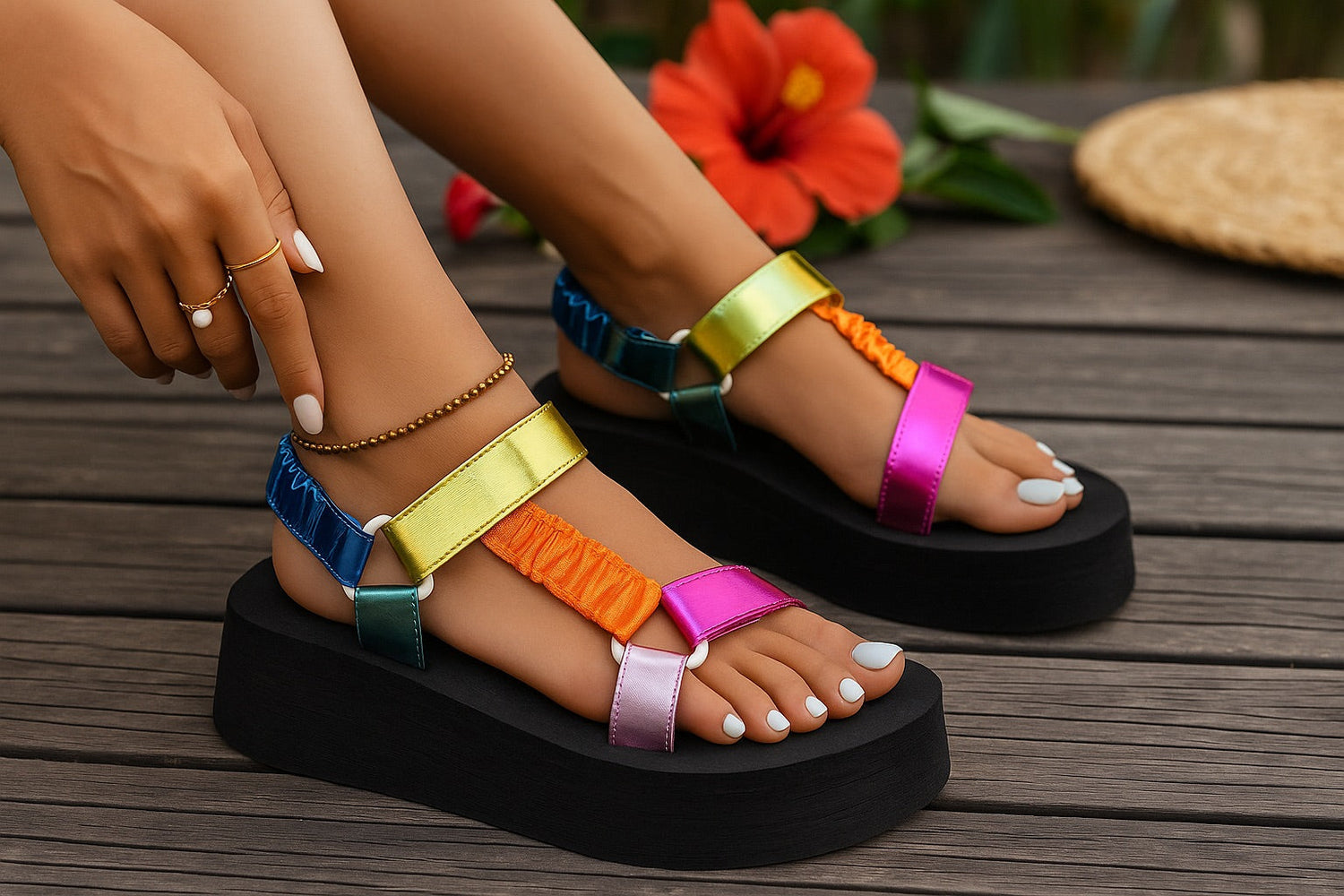
The formula for a July day that goes from beach to dinner is simpler than it looks. Start with a breathable base — a linen or cotton summer dress or a linen set from our matching sets edit. Add flat sandals that can handle sand and pavement equally. Carry the straw tote to the beach; swap to the crossbody when you head into town.
The one thing most people get wrong: they dress for the morning temperature and forget the afternoon. July afternoons peak between 2pm and 5pm. If your outfit doesn't breathe at 95°F, it doesn't work for the day. A linen dress that felt slightly casual at 9am is exactly right at 3pm when everything else feels like a mistake.
For a full outfit breakdown by occasion — boat day, beach wedding, vacation errands — see our guide to what to wear on a boat day.
Frequently asked questions
What is the coolest fabric to wear in a heatwave?
Linen is the single best option for extreme heat. Its hollow flax fibers move heat away from the body, it absorbs up to 20% of its weight in moisture before feeling wet, and it dries faster than cotton. A loose-weave cotton gauze is a close second. Both outperform any synthetic fabric at temperatures above 85°F.
What should I look for in a beach bag in 2026?
Five things: enough volume for a towel, sunscreen, a change of clothes, and a water bottle; a material that dries fast or wipes clean (straw, jute, and PU leather all qualify); a closure that keeps sand away from your phone; an adjustable or dual-strap system; and the lightest possible empty weight. Avoid suede, uncoated canvas, and heavy hardware for beach use.
Can I take a faux leather bag to the beach?
Yes, with conditions. PU leather wipes clean and doesn't absorb water the way canvas does, which makes it practical for a beach-to-town day. Keep it out of prolonged direct sun — UV exposure dries out the surface coating and causes cracking over time. A crossbody or sling style in PU leather works well when you need hands free and a secure closure.
Does linen wrinkle, and does it matter?
Linen wrinkles. That's the fiber releasing moisture as it dries — it's the mechanism that keeps you cool. Heavily starched, wrinkle-free linen has been treated in a way that partially closes the fiber structure and reduces breathability. Embrace the wrinkle. If it bothers you, mist the dress lightly with water and smooth by hand; it re-drapes in minutes without an iron.
How do I get sunscreen out of a straw bag?
Act quickly. Sunscreen is oil-based, and jute and straw absorb oils fast. Blot (don't rub) with a dry cloth first to lift as much as possible. Then apply a small amount of dish soap diluted in water with a soft brush, working in the direction of the weave. Rinse with a damp cloth and dry completely in indirect sunlight before storing. Avoid soaking the bag — saturated jute takes a long time to dry and can mold.