
How to Hand-Wash Delicate Fabrics at Home: A Complete Care Guide
Most delicate garments don't die in the wash — they die in the wrong wash. Too hot, too much agitation, the wrong detergent, or a hard wring at the end. Hand-washing isn't complicated, but the steps are different for silk versus linen versus a ribbed knit, and treating them all the same way is where things go wrong. This guide covers the method for each fabric type, what to avoid, and how to dry everything so it comes out looking the way it went in.
Why hand-washing beats the delicate cycle
The delicate cycle on most home machines still spins at 400–600 RPM. That's enough to stretch a silk bias cut, pill a fine knit, or distort the structure of a crochet stitch. Hand-washing keeps agitation entirely under your control — you decide how much friction the fabric gets, and the answer for most delicates is: very little.
There's also a water-temperature advantage. Machine cold cycles often aren't as cold as the dial suggests — water heats slightly from friction and the machine's internal temperature. Hand-washing in genuinely cool tap water (around 60–68°F) is safer for dye stability and fiber integrity than any machine setting.
Fabrics that should always be hand-washed: silk, satin, fine linen (under 4oz weight), open-weave crochet, cashmere, and any garment with embellishments, beading, or delicate embroidery. For heavier linen and cotton knits, the machine is fine on cold — but when in doubt, hand-wash.
What you actually need
Three things. A clean basin or sink (residue from cleaning products can damage fabric — rinse it out first). A pH-neutral detergent formulated for delicates — Woolite, The Laundress Delicate Wash, or any fragrance-free baby shampoo in a pinch. And a clean dry towel for the press-dry step.
That's it. You don't need a special basin, a mesh bag, or a garment steamer. Those are useful but not required. What you do need: cool water and patience. The whole process takes under 10 minutes of active handling.
One thing to skip: fabric softener. It coats fibers with a silicone layer that reduces breathability and, over time, weakens the fabric structure. For silk especially, it leaves a dull residue. White distilled vinegar (one tablespoon in the final rinse water) is a better softening agent — it neutralizes detergent residue and restores a slight sheen to silk and satin without the coating.
The core method, step by step
This sequence works for most delicates. Fabric-specific variations follow in the sections below.
- Fill the basin with cool water. Around 65°F — cold enough to be comfortable on your hands. Add a small amount of detergent (about half a teaspoon for a single garment) and swirl to dissolve before adding the garment.
- Submerge and press. Push the garment gently under the water and squeeze the soapy water through the fabric. No rubbing, no scrubbing. Think of it as pressing water in and out of the fibers rather than scrubbing dirt off a surface.
- Soak for 5–10 minutes maximum. Longer soaking weakens fibers and can cause colors to bleed into each other. For silk, 3–5 minutes is enough.
- Rinse twice. Drain the basin, refill with clean cool water, press the garment gently to release the soap. Repeat once more. Detergent residue left in fabric attracts dirt and stiffens the drape.
- Press out the water — never wring. Wringing twists the fiber structure and causes permanent distortion, especially in knits and silk. Instead, press the garment against the side of the basin, then transfer it to a clean dry towel, roll the towel up with the garment inside, and press firmly. The towel absorbs 60–70% of the moisture without any mechanical stress on the fabric.
- Reshape and dry. See the drying section below.
Silk and satin
Silk is a protein fiber — the same chemistry as hair. Heat, alkaline detergents, and chlorine bleach all break down that protein structure. A single hot wash can reduce the tensile strength of silk by up to 30% (Textile Research Journal, 2019). That's why a silk blouse that survives one machine wash often falls apart at the seams on the second.
Use the coolest water your tap produces. If your tap runs warm even on cold, add a few ice cubes. Submerge the garment for no more than 5 minutes — silk absorbs water quickly and doesn't need extended soaking. Rinse in water that's the same temperature as the wash water; sudden temperature changes cause silk to pucker permanently.
For satin slip dresses and any silk-finish viscose: the same rules apply. Viscose is technically a semi-synthetic but it behaves like silk in water — it weakens when wet and distorts easily. Handle it with the same care.
"Silk doesn't forgive heat. If you're unsure whether a fabric is silk or polyester, rub a small section between your fingers — silk warms up from body heat, polyester stays cool. That test takes five seconds and saves the garment."
— Lena Park, Livostyle Care & Materials Editor
Linen
Linen is more durable than silk but has its own rules. The fiber is naturally stiff and becomes stiffer when washed in hard water without proper rinsing. The goal with linen is to soften it through washing, not stiffen it further.
Use slightly warmer water than you would for silk — up to 85°F is fine for most linen weights. Heavier linen (above 6oz) can handle the machine on cold, but fine linen and any linen dresses with embroidery or open-weave details should stay in the basin. Agitate gently for 3–4 minutes, then rinse thoroughly. Linen holds detergent more than most fabrics, so a third rinse is worth it.
Linen wrinkles when wet. That's normal — it's not damaged, it's just drying. Shake the garment firmly before hanging to release the worst of the creases while the fabric is still damp. Ironing linen slightly damp (not fully dry) produces a much smoother result than ironing it bone dry.
One note on color: dark linen — navy, black, deep green — fades faster than light linen because the dye sits on the surface of the fiber rather than penetrating it. Wash dark linen inside-out and add a tablespoon of white vinegar to the rinse water to set the dye. Linen production uses 75% less water than cotton during growth (CELC, European Confederation of Linen and Hemp) — another reason to take care of it rather than replace it.
Knits and ribbed fabrics
Knits — ribbed cotton, sweater knits, jersey — are the category most people damage through drying rather than washing. The wash is fine; the problem is hanging a wet knit, which stretches the shoulder seams under the weight of the water-saturated fabric.
Wash in cool water with minimal agitation. The interlocking loops of a knit structure can snag on themselves if you're too rough, which causes pilling. Gentle pressing motions only. For ribbed knit pieces especially, avoid stretching the fabric while it's wet — the rib structure loses its elasticity if pulled when saturated.
For heavier sweaters and knitwear: add a small amount of hair conditioner (same pH as wool-wash products) to the final rinse. It lubricates the fibers and reduces the friction that causes pilling over repeated washes.
Dry flat. Always. A wet sweater hung on a hook will have shoulder bumps within 20 minutes that no amount of steaming will fully remove.
Crochet
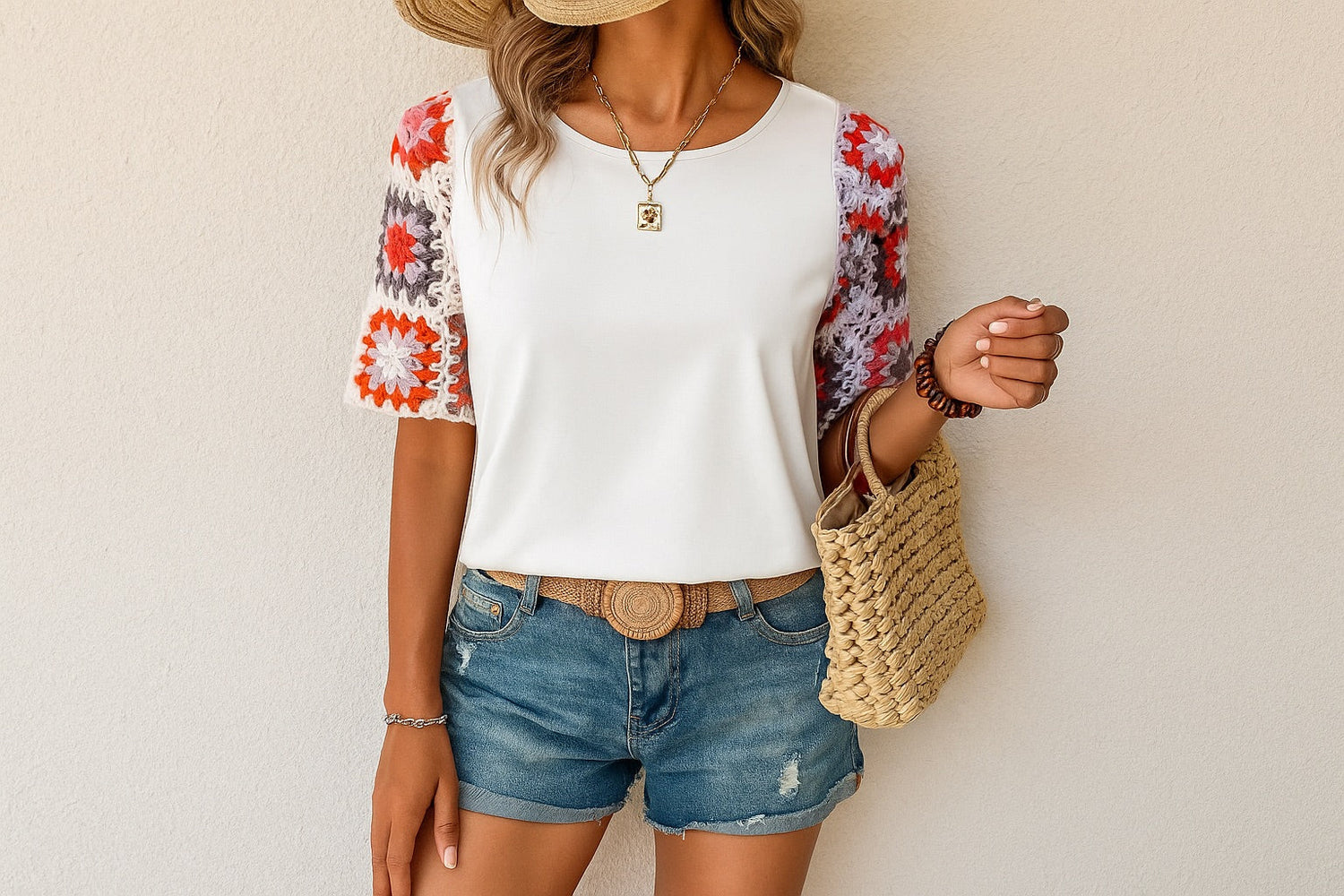
Crochet is an open-weave structure — the gaps between stitches are part of the design. That openness also means it catches on itself easily when agitated. Machine washing crochet, even on delicate, risks snagging the loops and pulling the structure out of shape.
Hand-wash in cool water with minimal movement. Don't press or squeeze crochet the way you would a solid-weave fabric — instead, submerge it and let the water do the work. A 5-minute soak is enough for most crochet pieces. Rinse by lifting the garment in and out of clean water rather than pressing it.
For the press-dry step, lay the crochet piece flat on the towel and press gently — don't roll it inside the towel the way you would for a knit, because the towel fibers can catch in the open weave. Reshape the piece while it's damp: pull it back to its original dimensions and pin it flat if the shape is particularly structured. Crochet dries in the shape it's left in.
Loungewear and modal blends
Modal, bamboo, and Tencel — the fabrics most common in loungewear and intimates — are semi-synthetic cellulose fibers. They're softer than cotton and more drape-y, which is why they're popular. They're also more sensitive to alkaline detergents and high heat than their soft hand suggests.
Cool water, pH-neutral detergent, gentle handling. Modal in particular loses its softness when washed in hard water without a rinse agent — the mineral deposits stiffen the fiber. If your tap water is hard, a small amount of white vinegar in the rinse water helps. Tencel (lyocell) has excellent wet strength compared to modal, but it still shouldn't be wrung — pressing is sufficient.
Loungewear sets in these fabrics are worth hand-washing even if the care label says machine-washable. The label reflects what the garment can survive, not what keeps it looking best longest.
Drying: the step most people get wrong
Tumble drying shortens the lifespan of delicate garments significantly — the American Cleaning Institute estimates heat drying reduces the life of elastane-blend fabrics by roughly 40%. For silk, even a low-heat tumble dry can cause irreversible fiber damage. The rule is simple: no heat, no direct sunlight, no hanging for knits.
Three drying methods, matched to fabric type:
- Lay flat: knits, crochet, heavy linen. On a clean dry towel or a mesh drying rack. Reshape while damp. Takes 4–8 hours depending on weight and humidity.
- Hang dry: silk, satin, light linen, modal. Use a padded hanger or fold the garment over a towel bar (not a wire hanger — it leaves marks). Keep out of direct sunlight, which fades dye faster than almost anything else. UV exposure degrades silk fiber at the molecular level within a few hours of direct sun.
- Roll and press: for any fabric that needs faster drying without heat. Roll the garment in a dry towel and press firmly, then transfer to a drying rack. The towel absorbs the bulk of the moisture in 2–3 minutes.
One more thing: don't dry delicates near a radiator or heating vent. The localized heat creates uneven drying — the side facing the heat dries and contracts while the other side is still wet, which sets wrinkles and distorts the shape permanently.
Stain treatment before you wash
Treat stains before the wash, not after. Once a stained garment goes through a full wash cycle — even a hand-wash — the stain sets further and becomes harder to remove. The 24-hour window after a stain occurs is when treatment is most effective.
For protein stains (sweat, blood, food): cold water only. Heat sets protein stains permanently. Blot with cold water, then apply a small amount of pH-neutral detergent directly to the stain, work it in gently with a fingertip, and let it sit for 10 minutes before washing.
For oil stains (makeup, food oil): a small amount of dish soap (Dawn or similar) applied directly to the dry stain before any water contact. Oil and water repel — adding water first dilutes the soap before it can break down the oil. Apply soap to the dry stain, press gently, wait 5 minutes, then proceed with the normal hand-wash.
For color transfer (a dark garment bled onto a light one): act immediately. Rinse the affected area in cold water, then soak in a solution of cold water and white vinegar (1:4 ratio) for 30 minutes. This works on fresh transfer; set transfer may require a color-safe oxygen bleach soak.
What not to use on delicates: bleach (destroys protein fibers and degrades dye), hot water on any stain (sets it), and rubbing motions (spreads the stain and damages the fiber surface). Blot, press, soak — never scrub.
Frequently asked questions
Can I use regular laundry detergent to hand-wash delicates?
Most regular laundry detergents are formulated for machine use and have a higher pH than delicate-wash products. That alkalinity is fine for cotton and synthetics but breaks down silk and wool fibers over time. Use a pH-neutral detergent (Woolite, The Laundress Delicate Wash, or fragrance-free baby shampoo) for anything delicate. If regular detergent is all you have, use a very small amount — half what you'd use for delicate wash — and rinse thoroughly.
How often should I hand-wash delicate garments?
Less often than you think. Silk and fine knits don't need washing after every wear unless you've sweated heavily or there's visible soiling. Airing a garment for a few hours after wearing — hung in a well-ventilated spot — removes most odor without any washing at all. Over-washing is one of the fastest ways to shorten the life of delicate fabrics. For silk blouses worn over underwear: every 3–4 wears is a reasonable baseline. For linen dresses worn in summer heat: every 1–2 wears.
My silk garment says "dry clean only." Can I hand-wash it anyway?
Often, yes — with care. "Dry clean only" on silk usually means the manufacturer won't guarantee the result if you wash it, not that washing will destroy it. The risk is dye bleeding, shrinkage, or texture change. Test on a hidden seam allowance first: wet a small section, press it between two white cloths, and check for dye transfer. If the dye holds and the fabric doesn't pucker, hand-washing in cool water is likely safe. Structured silk garments — blazers, tailored pieces — are a different case. The internal construction (interfacing, padding) often can't survive water, so dry cleaning is genuinely the right call there.
What's the best way to remove wrinkles from hand-washed linen?
Iron it while it's still slightly damp — around 80% dry. Linen responds to heat and moisture together far better than to heat alone. Use a medium-hot iron (linen setting) and a pressing cloth if the fabric is dark or has a textured weave. Alternatively, hang the garment in the bathroom during a hot shower — the steam relaxes the fibers without direct heat. For light creasing, misting with water and smoothing by hand is often enough. Heavily starched flat linen isn't the goal; a soft natural drape with minimal creasing is.
Can crochet pieces be machine-washed on delicate?
Technically possible in a mesh laundry bag on a true cold delicate cycle, but the risk of snags is real. The open-weave loops of crochet catch on the agitator, the drum, and each other. One snag can pull a stitch and distort the entire section. Hand-washing takes under 10 minutes and eliminates that risk entirely. For any crochet piece you care about, hand-washing is the right call. The machine is a convenience, not a care method.