
Bamboo Fabric, Honestly: Pros, Cons, and When to Buy
Bamboo fabric is one of the most misrepresented materials on the market right now. The plant itself is genuinely impressive — fast-growing, low-input, no pesticides. What happens between the bamboo grove and your clothing, though, is a different story. Whether it earns a place in your closet depends on which type of bamboo fabric you're buying, what you're wearing it for, and how much the "sustainable" label matters to you when the manufacturing process tells a more complicated tale.
What bamboo fabric actually is (it's not what the label implies)
The phrase "bamboo fabric" covers a wide range of finished textiles that share one thing: they started as bamboo pulp. After that, the processes diverge significantly. Most bamboo clothing on the market is bamboo viscose — a semi-synthetic fiber made by dissolving bamboo cellulose in chemical solvents, then extruding it into fibers. The Federal Trade Commission ruled in 2010 that brands cannot call this fabric "bamboo" without qualification, because the resulting fiber is chemically indistinguishable from rayon made from any other plant source.
That ruling is still routinely ignored. Walk through any contemporary boutique — including online — and you'll find "bamboo" tags on garments that are, technically, bamboo rayon. That's not fraud, exactly. But it does mean the eco-story you're buying into is more complicated than a label suggests.
The bamboo plant itself is legitimately low-impact. It grows up to 35 inches per day, requires no irrigation in most climates, and sequesters carbon at roughly four times the rate of equivalent tree species (International Bamboo and Rattan Organization, 2023). The problem is that most processing methods erase those environmental advantages by the time the fiber reaches a loom.
The three types: viscose, lyocell, and mechanical
Understanding which type you're buying is the single most useful thing you can do before purchasing a bamboo garment.
- Bamboo viscose (rayon): the most common. Soft, drapey, and moisture-wicking — but produced using sodium hydroxide and carbon disulfide, chemicals that are hazardous to workers and difficult to recover in open-loop systems. Most brands use this. It's not inherently bad fabric; it's just not the clean story the marketing suggests.
- Bamboo lyocell: produced in a closed-loop system where 99%+ of solvents are recovered and reused (similar to the process used for Tencel, which is lyocell from eucalyptus). Genuinely lower environmental impact. Harder to find, usually more expensive, and the label should specify "bamboo lyocell" — not just "bamboo."
- Mechanical bamboo: bamboo fibers separated mechanically, without chemicals — the same basic process as linen from flax. Rare in apparel because it produces a coarser, stiffer fabric. You'll see it occasionally in home textiles. Not what you're buying in a dress or tank top.
"When a tag says 'bamboo,' I always ask which type. Viscose and lyocell perform similarly in the hand — soft, fluid, temperature-regulating — but their production stories are completely different. Lyocell is the one worth paying a premium for."
— Lena Park, Livostyle Care & Materials Editor
Where bamboo fabric genuinely performs
Set aside the environmental debate for a moment. As a wearing experience, bamboo viscose and lyocell both deliver real benefits that justify their presence in a closet.
- Temperature regulation: bamboo fibers have a micro-porous cross-section that moves moisture away from the skin faster than standard cotton. In practice, this means you stay cooler in summer heat and don't feel clammy after a light sweat. For activewear and loungewear, this is a genuine advantage over cotton jersey.
- Softness against the skin: bamboo viscose is one of the softer fibers available at a mid-market price. The surface is smooth and low-friction — important for anyone with sensitive skin or eczema. It's not as fine as silk, but it's closer to silk than it is to standard cotton.
- Drape: bamboo fabric falls fluidly, which makes it well-suited to maxi dresses, wide-leg pants, and any silhouette that relies on movement rather than structure.
- Odor resistance: bamboo fiber has some natural antimicrobial properties, though these are partially reduced by the viscose process. In a bamboo lyocell, they're more intact. The practical result: bamboo garments tend to stay fresher between washes than polyester equivalents.
- UV protection: bamboo fabric provides a UPF (Ultraviolet Protection Factor) of around 50+ in most weaves — a useful property for lightweight summer layers and beach cover-ups.
Where it falls short
Bamboo fabric has real weaknesses. Knowing them upfront prevents the specific disappointment of a garment that looked great for two months and then deteriorated.
- Durability under friction: bamboo viscose pills faster than cotton and wears thin at high-friction points — underarms, inner thighs, anywhere fabric rubs repeatedly. A bamboo-blend garment (bamboo + spandex, bamboo + cotton) holds up better than 100% bamboo viscose.
- Shrinkage: bamboo viscose shrinks significantly in warm water and tumble drying. The first hot-wash mistake can take a maxi dress to midi length. Cold wash, hang dry — no exceptions.
- Lack of structure: the drape that makes bamboo beautiful in a flowing silhouette makes it a poor choice for anything that needs to hold a shape — a tailored blazer, a structured skirt, a fitted bodice with boning. For those, linen or a cotton-polyester blend performs better.
- Greenwashing risk: because "bamboo" sounds sustainable, brands charge a premium for viscose that costs no more to produce than standard rayon. You're often paying for marketing, not manufacturing ethics. Look for certifications: OEKO-TEX Standard 100 (tests for harmful chemicals in the finished fabric) or USDA Certified Biobased for the fiber source. These don't guarantee a clean production chain, but they're better signals than the word "bamboo" alone.
- Chemical processing (viscose): the solvent-based production of bamboo viscose generates wastewater that, in facilities without closed-loop systems, enters local water supplies. This is the same problem as conventional rayon — bamboo origin doesn't change the downstream chemistry.
Bamboo vs. cotton, linen, and Tencel
Each fiber has a context where it wins. Here's how bamboo stacks up against the alternatives you're most likely considering.
- Bamboo vs. cotton: bamboo is softer and more moisture-wicking; cotton is more durable and easier to care for. For everyday summer dresses and tops, cotton holds up better over repeated washes. For activewear or sleepwear where skin comfort is the priority, bamboo wins.
- Bamboo vs. linen: linen is structurally stronger, gets better with age, and has a significantly lower environmental footprint per lifecycle (flax requires no irrigation and very little processing). Bamboo is softer and drapes more. For structured linen dresses and warm-weather separates, linen is the more durable investment. For flowing silhouettes and activewear, bamboo has the edge.
- Bamboo vs. Tencel (lyocell from eucalyptus): this is the closest comparison. Both are semi-synthetic cellulosic fibers. Tencel lyocell is produced in a certified closed-loop process; bamboo lyocell is similar but less standardized. Tencel has more rigorous third-party certification (Lenzing AG publishes detailed environmental data). If environmental impact is your primary concern and you're choosing between lyocell options, Tencel has a more transparent supply chain. Performance-wise, they're nearly identical.
Bamboo uses significantly less water than cotton during cultivation — roughly 1/3 the water per kilogram of fiber at the agricultural stage (Textile Exchange, Preferred Fiber & Materials Report, 2023). That advantage shrinks considerably once chemical processing is factored in.
When to buy bamboo — and when to choose something else
Here's the practical filter we use at Livostyle when evaluating bamboo pieces for our sustainable edit.
Buy bamboo when:
- You're shopping for loungewear, pajamas, or activewear — categories where skin comfort and moisture-wicking matter more than structural durability.
- The label specifies bamboo lyocell and carries an OEKO-TEX or equivalent certification.
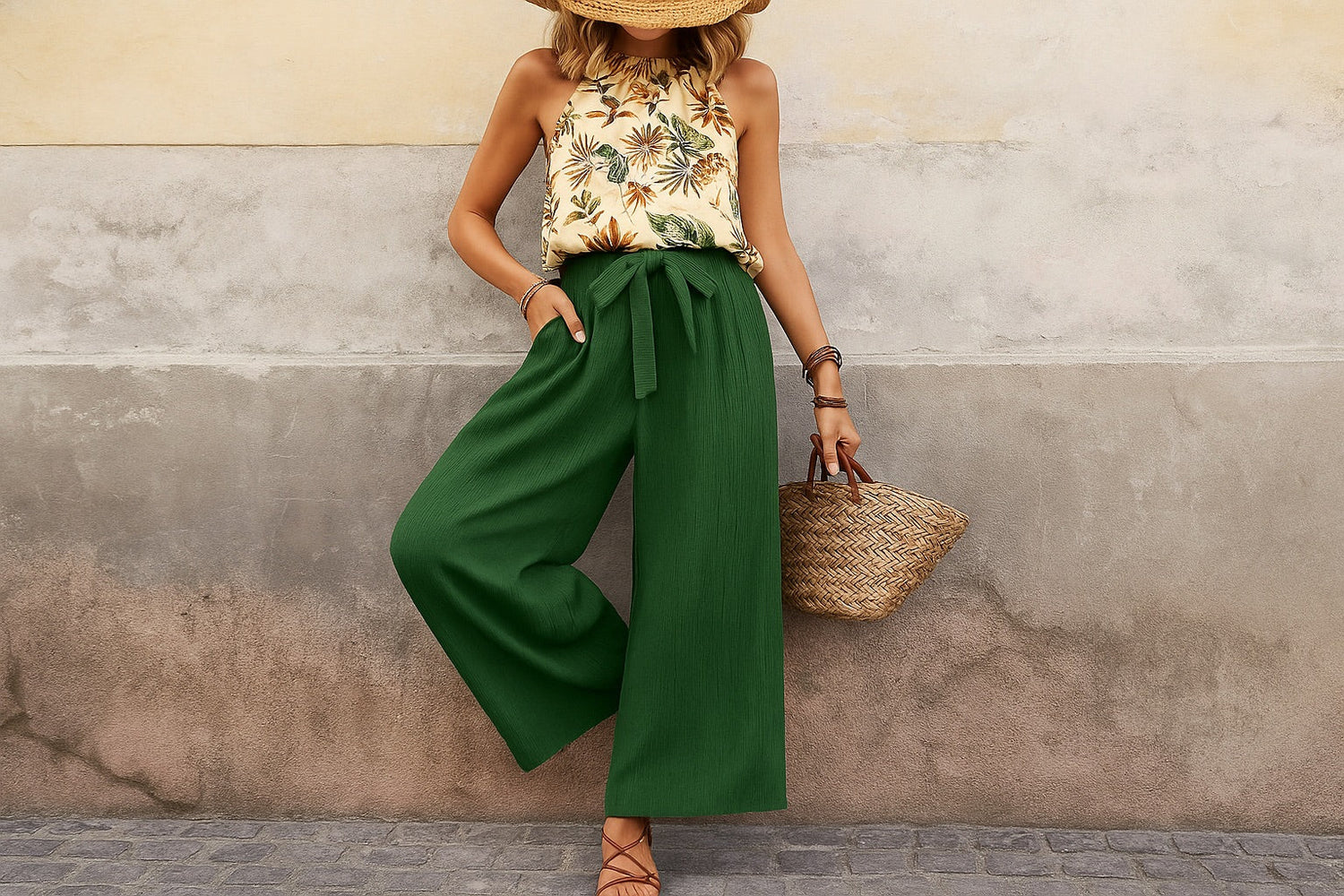
- You want a fluid, drapey silhouette in a vacation dress or wide-leg pants and you'll care for it gently.
- You run warm and want a fabric that regulates temperature better than standard cotton jersey.
Choose something else when:
- You need a garment that holds its shape over 50+ wears — linen or cotton-canvas is a better long-term investment.
- The label says "bamboo" without specifying viscose or lyocell, and there's no third-party certification. You're likely paying a sustainability premium for standard rayon.
- You need a structured piece — a blazer, a fitted midi with boning, a tailored trouser. Bamboo's drape works against structure.
- You're building a capsule wardrobe and want fewer, more durable pieces. Bamboo viscose is not a high-durability fiber.
How to care for bamboo fabric
Bamboo fabric is more delicate than its softness suggests. These three rules prevent most of the common damage:
- Cold wash, always. Warm or hot water causes bamboo viscose to shrink and lose shape. Use a gentle cycle, cold water, and a mild detergent without enzymes (enzymes break down cellulosic fibers over time).
- Never tumble dry. The heat and mechanical agitation of a dryer are the fastest way to pill and shrink bamboo fabric. Hang or lay flat to dry. If you're in a hurry, the lowest heat setting on a dryer for 10 minutes, then hang — not a full cycle.
- Skip the fabric softener. Fabric softener coats the fiber surface and reduces bamboo's natural moisture-wicking properties over time. It also attracts lint. A small amount of white vinegar in the rinse cycle achieves a similar softening effect without the coating.
Store bamboo garments folded, not hung. Hanging stretches the fabric at the shoulders and distorts the drape, particularly in heavier pieces like maxi dresses. For wrinkles, use a steamer rather than a hot iron — bamboo viscose scorches easily at high iron temperatures.
Frequently asked questions
Is bamboo fabric actually sustainable?
The bamboo plant is sustainable — fast-growing, low-water, no pesticides needed. The fabric is more complicated. Most bamboo clothing is bamboo viscose, produced with chemical solvents in processes that can generate hazardous wastewater. Bamboo lyocell, made in a closed-loop system, is genuinely lower-impact. If sustainability is your priority, look for bamboo lyocell with OEKO-TEX or equivalent certification, not just the word "bamboo" on a label.
What is the difference between bamboo viscose and bamboo lyocell?
Both start with bamboo cellulose, but the processing differs significantly. Bamboo viscose uses sodium hydroxide and carbon disulfide as solvents in an open-loop process — chemicals that are hard to recover and can pollute local water systems. Bamboo lyocell uses a closed-loop process where 99%+ of solvents are captured and reused. The finished fabrics feel similar — soft, drapey, moisture-wicking — but lyocell has a substantially lower environmental footprint. The label should specify which you're buying.
Does bamboo fabric shrink?
Yes. Bamboo viscose shrinks noticeably in warm or hot water and in a tumble dryer. Always wash cold on a gentle cycle and hang or lay flat to dry. A full dryer cycle on a bamboo garment can shrink it one full size. Bamboo lyocell is slightly more stable but still benefits from cold washing and air drying.
Is bamboo fabric good for sensitive skin?
Generally, yes. The smooth fiber surface is low-friction and unlikely to irritate sensitive skin. It's a common recommendation for people with eczema or contact dermatitis. The caveat: if the garment is bamboo viscose without OEKO-TEX certification, residual processing chemicals in the fabric could be a concern. Look for OEKO-TEX Standard 100 certification, which tests the finished fabric for harmful substances.
How does bamboo fabric compare to Tencel?
Both are semi-synthetic cellulosic fibers with similar wearing properties — soft, drapey, moisture-wicking, temperature-regulating. The key difference is transparency. Tencel is a branded lyocell produced by Lenzing AG with published environmental data and rigorous third-party certification. Bamboo lyocell is similar in process but less standardized across manufacturers. If you're choosing between the two for environmental reasons, Tencel's supply chain is more verifiable. Performance-wise, they're nearly identical in everyday wear.