
What to Wear to a Beach Wedding: The Complete Guest & Bride Edit
Beach weddings have a dress code problem. The invite says "beach formal" or "coastal chic" and suddenly nobody knows whether to wear a floaty maxi or a cocktail dress — or whether their favorite block heels are going to disappear into the sand. At Livostyle, we've styled enough of these to know what actually works. This guide covers the guest edit, the fabric rules, the footwear reality check, and a few notes for brides who want to look like themselves rather than a stock photo.
Decoding beach wedding dress codes
"Beach formal," "resort casual," "coastal chic," and "island attire" all mean roughly the same thing: dressed up, but not ballgown territory. The practical translation is a cocktail-to-formal-length dress in a lightweight fabric, with footwear that won't require you to be carried across the sand.
If the invite just says "casual" — and beach weddings increasingly do — a midi dress in a relaxed silhouette is the right call. Not a sundress you'd wear to the farmers' market, but not a structured evening gown either. The gap between those two is exactly where a beach wedding guest lives.
One rule holds regardless of what the invite says: check the venue. A ceremony on a private yacht has a different standard than one on a public beach at 4pm. When in doubt, text the bride.
Fabrics that work — and ones that don't
Fabric is the most important decision you'll make for a beach wedding. Get this right and the rest follows.
- Linen: breathes, drapes, handles humidity. It will wrinkle — that's not a flaw at a beach event. Linen production uses 75% less water than conventional cotton (CELC, European Confederation of Linen and Hemp), which is worth knowing if the couple has sustainability on their radar.
- Cotton voile and cotton gauze: lighter than standard cotton, moves in a breeze, and photographs beautifully in natural light.
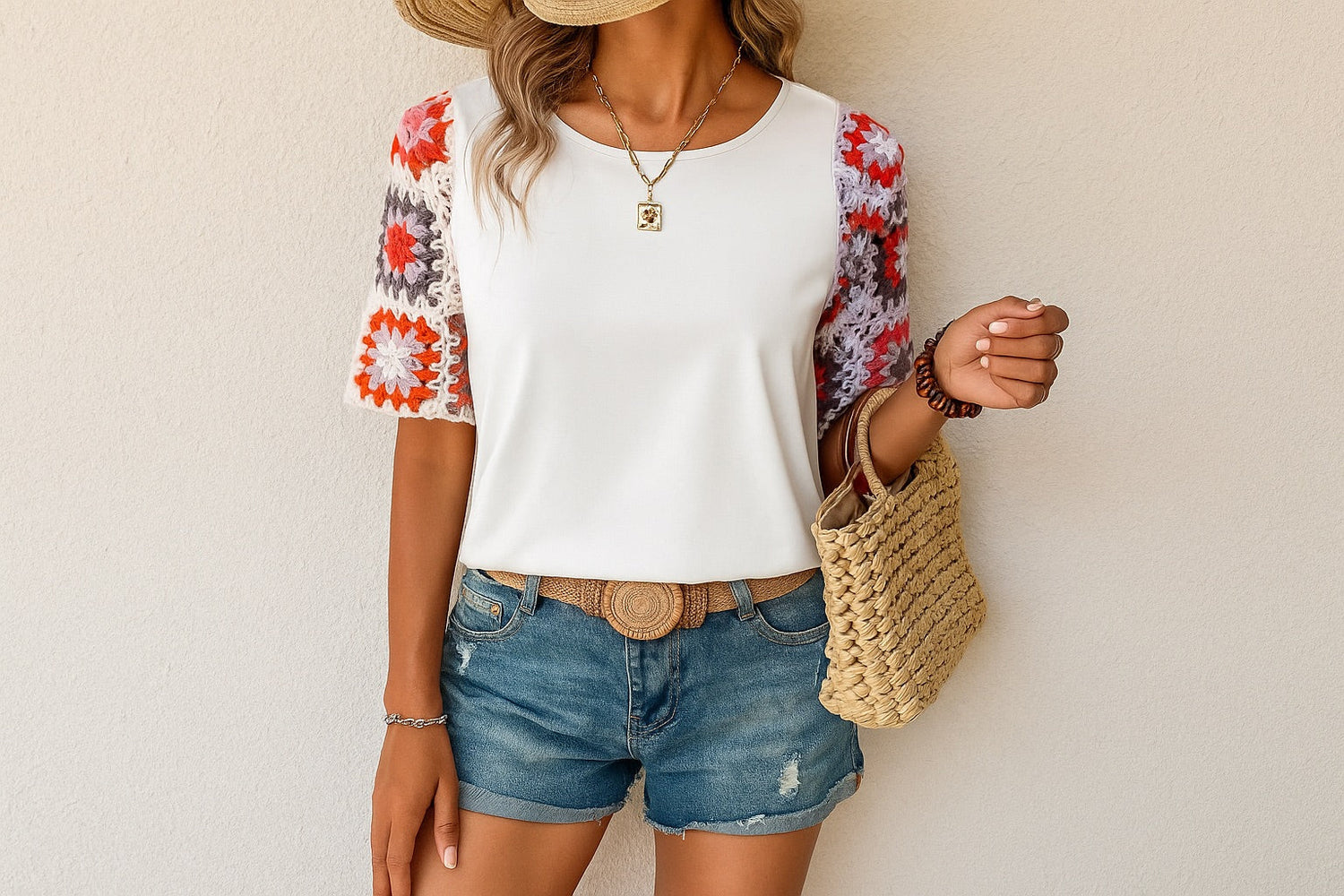
- Crochet knit: open-weave structure keeps air moving. The texture reads dressed-up even in a relaxed silhouette. It's one of the few fabrics that looks better windswept than flat.
- Chiffon and georgette: float in sea breeze, photograph well, and stay cool. The trade-off is that they can be sheer — check yours in direct sunlight before the day.
- Silk-finish viscose or Tencel: drapes like silk, costs less, and handles the heat better than pure silk does.
Avoid: heavy satin, structured brocade, and anything with a stiff underlining. They trap heat and don't move. Velvet is an obvious no. Sequined dresses are technically fine for an evening beach reception but impractical for a daytime ceremony in direct sun — the reflection is blinding for photographers.
What guests should wear
The beach wedding guest dress formula is simpler than it looks. Pick a length (midi or maxi), pick a fabric from the list above, and add one statement accessory. That's it.
Midi dresses
A midi hits between the knee and the ankle — long enough to look intentional, short enough that you're not dragging fabric through the sand. The wedding guest midi dress is the most practical option for ceremonies that move from beach to reception venue. You're not lifting your hem at every step.
For a beach setting specifically, look for an A-line or flowy silhouette over a bodycon cut. Bodycon in direct sun on a beach is uncomfortable and photographs harshly.
Maxi dresses
Maxi dresses are the most photographed choice at beach weddings — the length catches the wind and moves. The trade-off is practical: walking on sand in a floor-length dress requires some attention. Tiered hems and ruffled hems handle this better than straight cuts because there's more give.
A crochet-knit maxi is particularly strong here. The open weave keeps you cool, the texture photographs beautifully, and it reads formal enough for a ceremony without looking like you're trying too hard.
Our Crochet Knit Beach Cover Up Dress — an open-knit V-neck with short sleeves in a warm beige — works as a layering piece over a swimsuit for pre-ceremony beach time, then transitions to the ceremony itself with the right accessories underneath. It's the kind of piece that earns its spot in a beach weekend bag.
What about jumpsuits?
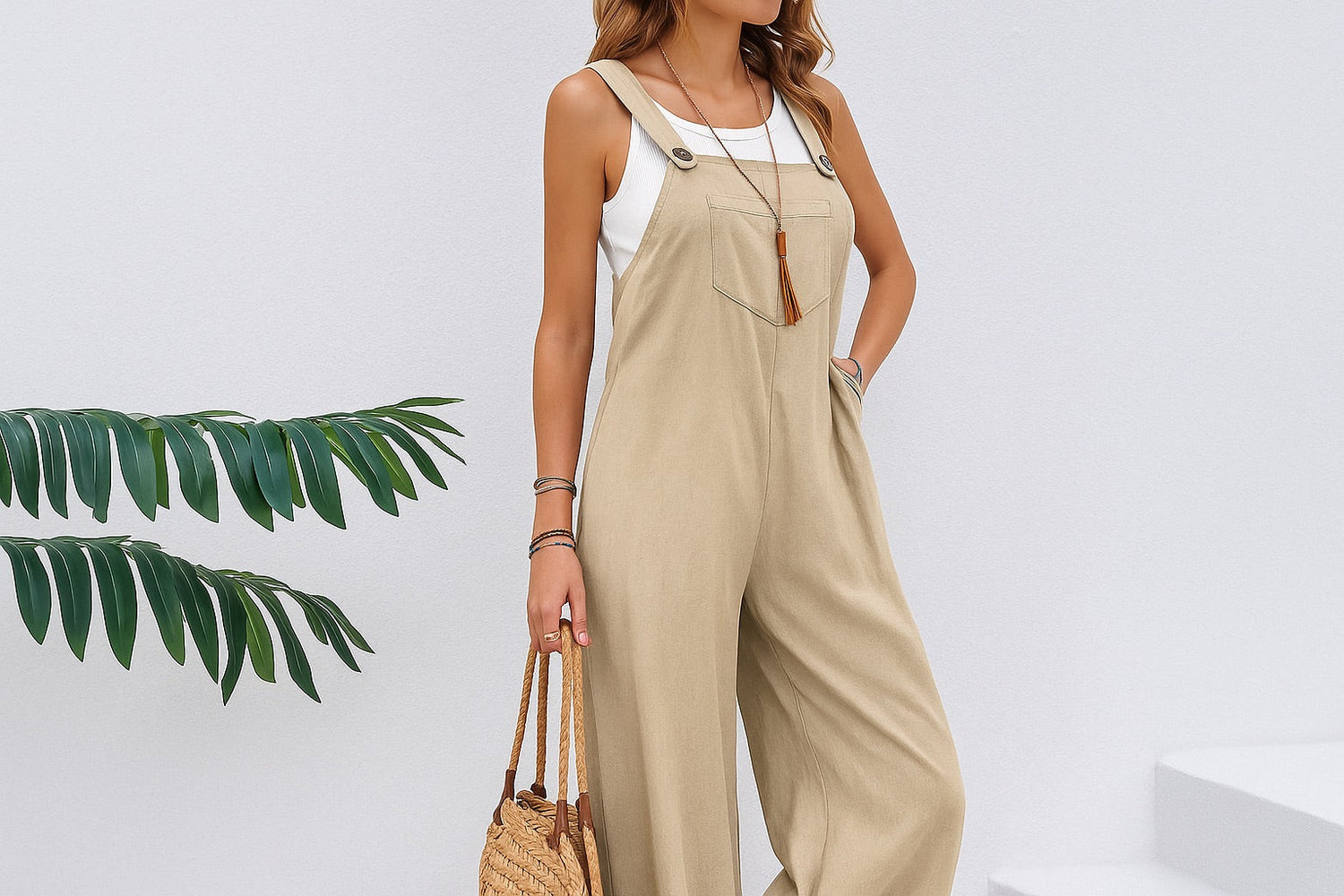
A wide-leg linen or chiffon jumpsuit is a legitimate alternative to a dress at a beach wedding. The styling logic is the same: lightweight fabric, relaxed silhouette, flat or block-heel sandal. Check our jumpsuits and rompers edit if you're looking for a non-dress option.
Colors and prints: what reads well outdoors
Outdoor light is unforgiving on certain colors. Very pale yellow reads washed-out in direct sun. Neon anything competes with the setting rather than complementing it. Black absorbs heat — not ideal for a 3pm ceremony in June.
Colors that photograph well at the beach: terracotta, dusty rose, sage green, soft coral, warm white (not bridal white — more of an off-white or cream), sky blue, and sand tones. These work with natural light rather than fighting it.
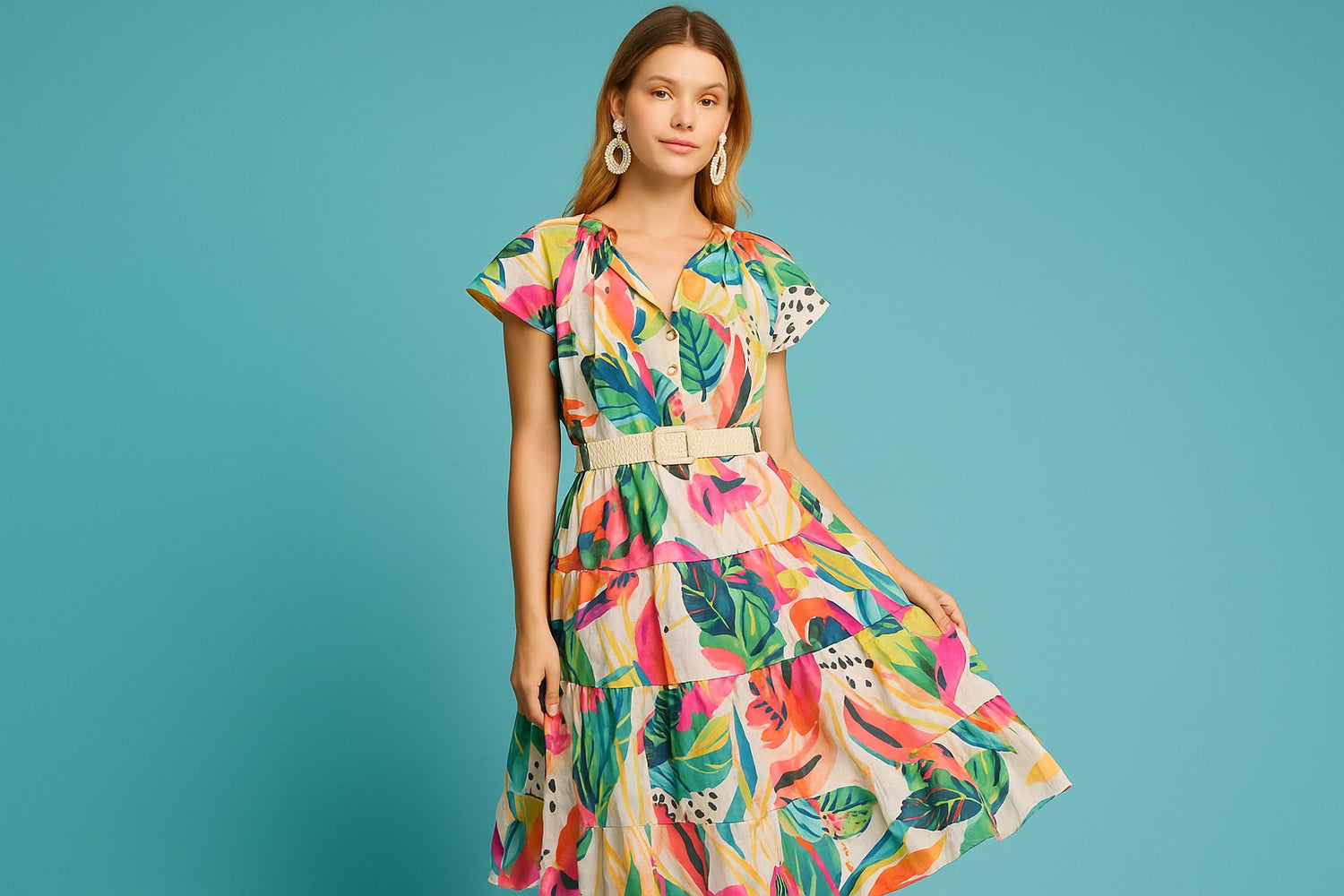
On prints: florals are the obvious beach wedding choice, and they work. Floral dresses in watercolor or painterly prints read more elevated than tight geometric florals. Stripes are also strong — vertical stripes in particular read coastal without veering into nautical costume territory.
"At beach weddings, the background is doing a lot of the work — blue water, golden sand, natural light. You don't need to compete with it. A dress in a soft, warm neutral photographs better than almost anything else in that setting."
— Jess Martinez, Livostyle Wedding & Events Editor
One color rule that holds at every wedding, beach or otherwise: don't wear white, ivory, or cream that reads bridal. A warm off-white in a clearly non-bridal silhouette (think crochet cover-up, not a floor-length column gown) is usually fine. When in doubt, go a shade warmer — blush, champagne, or sand.
Footwear: the sand problem
Stilettos sink. This is not a style opinion — it's physics. A 3-inch stiletto on sand distributes your weight onto roughly 1 square centimeter of heel, which disappears immediately. We learned this the hard way at a Malibu ceremony in 2023 and we're passing the lesson on.
What actually works:
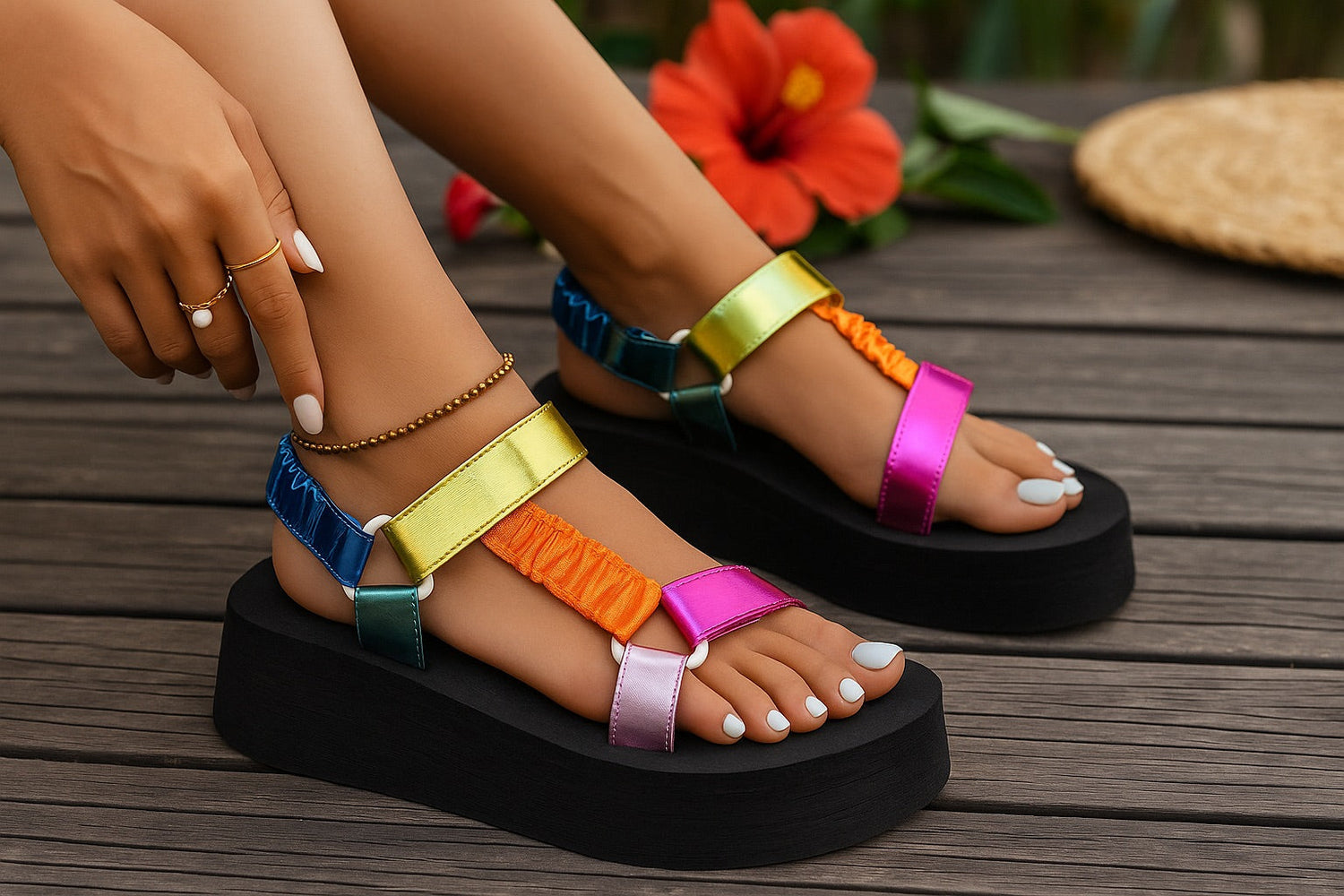
- Flat strappy sandals: the default beach wedding shoe. Leather or metallic. Wide straps stay put in sand better than thin ones.
- Block-heel sandals: if you want height, a block heel with a wide base distributes weight enough to stay on top of packed sand. Avoid on loose sand — you'll still sink, just more slowly.
- Wedges: the most practical elevated option for a beach ceremony. A wide wedge base handles sand better than any other heeled shoe.
- Barefoot: completely acceptable at most beach weddings, especially for the ceremony itself. Carry sandals for the reception.
Browse our sandals edit for flat and low-heel options that work from ceremony to reception. For the reception, if it moves indoors or to a harder surface, block-heel and wedge options are worth having in your bag.
What to avoid (and why)
A few things that seem fine in theory and cause problems in practice:
- Very structured silhouettes: boning, heavy underlining, and structured bodices trap heat. You'll be uncomfortable by the second hour.
- Heavily beaded or sequined dresses for daytime: they reflect direct sunlight into the photographer's lens and into other guests' eyes. Save these for evening receptions.
- Extremely short hems: a micro-mini at a beach wedding is a wind problem. Any hem shorter than mid-thigh becomes a full-time management task in a sea breeze.
- Synthetic fabrics that don't breathe: polyester and nylon trap heat. Fine for an air-conditioned reception; miserable for an outdoor ceremony in June.
- New shoes you haven't broken in: sand plus a new shoe equals blisters within 20 minutes. Wear shoes you've walked in before.
For the bride: beach-ready dress options
The beach bride has more options than the traditional bridal market suggests. A structured cathedral-train gown is not the only choice — and at a beach ceremony, it's often not the best one.
What works for a beach bride:
- Flowy A-line or empire waist: moves in the wind, photographs beautifully from any angle, and doesn't require a bustle for the reception.
- Lace or crochet detail: texture catches the light naturally without needing embellishment. It also reads romantic without being fussy.
- Midi length: practical for sand, still formal enough for a ceremony. A midi bridal dress is one of the most underused options in the category.
- Two-dress strategy: a simpler dress for the ceremony (easier to move in on sand), a second option for the reception. More brides are doing this, and it works.
For beach brides who want to browse non-traditional options, our white dresses and white summer dresses collections include lightweight, movement-friendly silhouettes that work for an intimate beach ceremony without the weight of a traditional bridal gown.
A lace-detail spaghetti-strap dress in white is a strong beach ceremony option — the lace reads bridal, the silhouette is practical, and the length (midi) handles sand without drama. Our Lace Detail V-Neck Spaghetti Strap Dress — a white bodycon midi with V-neck and lace trim — sits at the more relaxed end of the spectrum, ideal for an intimate beach elopement or a low-key ceremony where the couple wants to feel like themselves rather than a magazine spread.
According to Brides magazine, beach and destination weddings now account for more than 25% of all US weddings annually — which means the market for non-traditional bridal options has never been larger, and the social permission to wear something unexpected has never been stronger.
Accessories that survive salt air
Salt air and humidity are hard on certain materials. A few notes:
- Jewelry: gold-plated pieces hold up better than silver-plated in salt air. Sterling silver oxidizes quickly in humidity. If you're wearing silver, go solid sterling or keep pieces small. Our gold jewelry edit has options that work for both the ceremony and the reception.
- Bags: a small woven clutch or a structured mini bag works better than a leather tote at the beach — leather and sand don't mix well. Check our mini bags for compact options that fit a phone, card, and lipstick.
- Hats: a wide-brim hat for a daytime ceremony is both practical and photogenic. Remove it for the vows — it blocks the view for guests behind you. Our hats collection has woven and floppy-brim options that pack flat in a weekend bag.
- Sunglasses: necessary for a daytime ceremony facing the water. Have a case — you'll need to put them away for the ceremony itself. Our sunglasses edit has styles that work for both the ceremony arrival and the post-ceremony beach photos.
One accessory rule that applies specifically to beach weddings: skip the fascinator or elaborate hair accessories. Wind will move them. Opt for a simple hair clip, a low bun, or let the sea air do what it does.
Plus-size and petite notes
The same fabric and silhouette rules apply regardless of size — lightweight, flowy, and movement-friendly. A few additional notes:
For plus-size guests, an empire waist or wrap silhouette in a flowing fabric (chiffon, linen, crochet) is the most comfortable option for an outdoor ceremony. Avoid anything with a very fitted waist in a non-stretch fabric — heat and sitting expand everything slightly. Our plus-size wedding guest dresses edit is built around these principles.
For petite guests, a midi that hits below the knee can read long — a hem at the knee or just below is often more proportionate. Our petite dresses collection includes options sized for 5'4" and under.
Frequently asked questions
Can I wear white to a beach wedding as a guest?
No — and this rule holds at beach weddings the same as any other. White, ivory, and cream in a bridal-adjacent silhouette are off-limits for guests. A warm off-white in a clearly non-bridal style (like a crochet cover-up or a printed cotton dress) is usually fine, but when in doubt, go a shade warmer: blush, champagne, or sand reads as a different color category entirely.
What shoes should I wear to a beach wedding?
Flat strappy sandals are the most practical option for a ceremony on sand. Block-heel sandals work on packed sand and at the reception. Wedges are the best choice if you want height — the wide base handles sand better than a stiletto or kitten heel. Stilettos sink into sand immediately. If the ceremony is on a hard surface (a dock, a terrace, a beach club), any heel works fine.
What length dress is best for a beach wedding?
Midi length is the most practical — long enough to look intentional, short enough that you're not managing fabric on sand. Maxi dresses work beautifully and photograph well, but require more attention when walking on loose sand. Mini dresses shorter than mid-thigh become a wind management problem outdoors. For most guests, a midi in a flowing fabric is the right call.
What should a beach bride wear?
A flowy A-line or empire-waist dress in linen, chiffon, or lace-detail fabric. Midi and tea-length silhouettes are practical on sand and still read ceremonial. Structured ballgowns with heavy underlining trap heat and don't move well on uneven terrain. Many beach brides use a two-dress approach: a lighter dress for the ceremony, a second option for the reception. White, ivory, and soft champagne all work — it's your day.
Is it okay to wear a floral dress to a beach wedding?
Yes. Floral dresses are one of the strongest choices for a beach wedding — they work with natural outdoor light and read festive without being over-formal. Watercolor and painterly florals photograph better than tight geometric prints in direct sunlight. Avoid florals in white or ivory backgrounds if you're a guest — the overall effect can read too close to bridal depending on the silhouette.